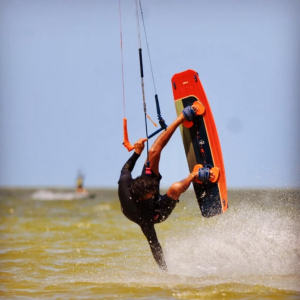
Water conditions for kitesurfing in Isla Blanca determine riding style, technical demands, and how structured a session can be. Isla Blanca is not a single “type of water.” It combines a shallow inner lagoon and an open-sea coastline within the same area, creating two clearly differentiated riding environments.
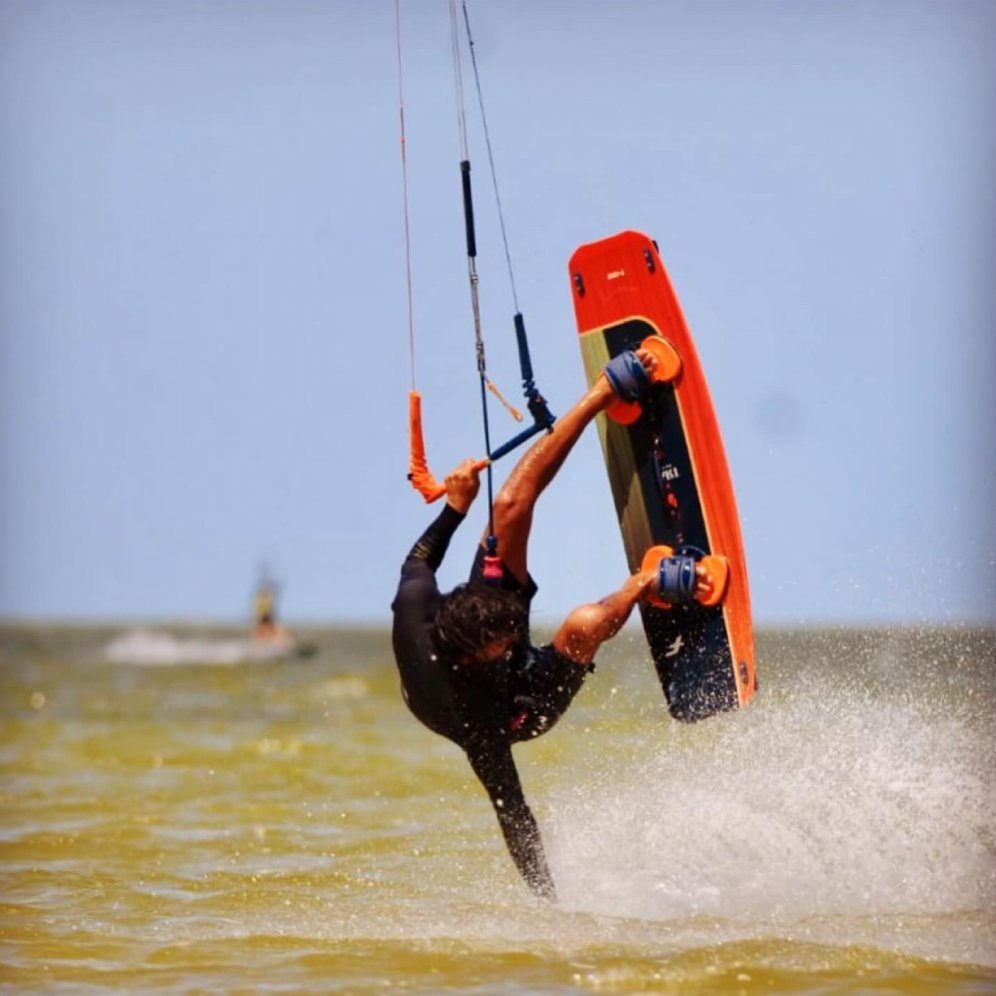
Understanding these water conditions helps riders choose equipment, set realistic session goals, and plan multi-day training—especially when considering kitesurfing lessons in Isla Blanca.
🌊 General Water Conditions in Isla Blanca
IIsla Blanca is recognized for offering large flat-water zones, mainly inside the lagoon. The shallow depth and partial protection from ocean swell create a more controlled surface compared to beaches fully exposed to the Caribbean.
Typical lagoon characteristics include:
- Predominantly flat to lightly textured surface
- Minimal wave development under normal wind conditions
- Noticeable changes depending on wind strength and tide level
This is why Isla Blanca is commonly treated as a flat-water training environment near Cancún. But flat water is not the whole story.
💧 Lagoon Depth and Bottom Conditions
The lagoon is known for being shallow across wide areas, which directly affects board control and the “feel” of the session.
Technical aspects to consider:
- Depth varies by zone and tide
- Mostly sandy bottom
- Multiple standable sections
What shallow water changes (technically)
Shallow water makes riding more “honest”:
- Fin clearance becomes real: aggressive edging or carving can punish technique
- Board feedback increases: small mistakes show up faster
- Recovery behavior changes: relaunch strategy and positioning matter more
This is why the lagoon can be excellent for beginners building control—while still requiring responsible evaluation before launching.ntrol de tabla, pero siempre es necesario evaluar el punto específico de entrada antes de lanzar.
🌬️ Wind Interaction and Surface Texture
Wind direction and intensity shape water texture in Isla Blanca.
Inside the lagoon, wind typically produces:
- Reduced chop compared to open sea conditions
- Short, low surface texture
- A direct, responsive kite feel
When wind strength increases, micro-chop and surface irregularities can form. Even then, significant wave development inside lagoon zones is uncommon.
Related reading: Wind Conditions for Kitesurfing in Isla Blanca
🌊 Open Sea Conditions in Isla Blanca
On the ocean side, conditions shift noticeably. The open sea may present:
- More visible wave activity
- Direct exposure to regional swell
- Greater variability in surface movement
This environment demands continuous environmental awareness and technical adjustment during navigation, especially with stronger wind or fatigue.
🧭 Lagoon vs Open Sea: Practical Differences for Riders
Isla Blanca’s defining feature is that both environments coexist. Riders can choose a session style based on daily conditions and skill level.
Lagoon
- Flatter water
- Reduced wave impact
- More predictable surface
- Strong setting for control drills and progression
Open Sea
- More dynamic surface
- Presence of swell
- Higher variability
- Better for learning real-world adaptation and reading water
This dual setup is one of the reasons Isla Blanca is widely treated as a progression-friendly location in Mexico.
⚠️ Why On-Site Water Evaluation Is Essential
Water conditions in Isla Blanca can change due to:
- Wind direction shifts
- Wind intensity
- Tide variation
- Local currents and moving sandbars
Because of this, visual and technical evaluation before launching is always recommended. Responsible kitesurfing involves reading both wind and water on-site, not assuming the lagoon will behave the same way every day.
Conclusion: Understand Water Conditions Before Booking Lessons
Water conditions for kitesurfing in Isla Blanca are defined by the combination of shallow lagoon zones and open Caribbean exposure. That creates two distinct environments in one spot.
Understanding these variations helps riders make informed decisions, adjust expectations, and plan training sessions more effectively—especially when booking kitesurfing lessons in Isla Blanca for multiple days.
Related reading: Best Season for Kitesurfing in Isla Blanca